
7 Secrets of Business Casual Men: Build a Smart Office Wardrobe for Every Work Setting

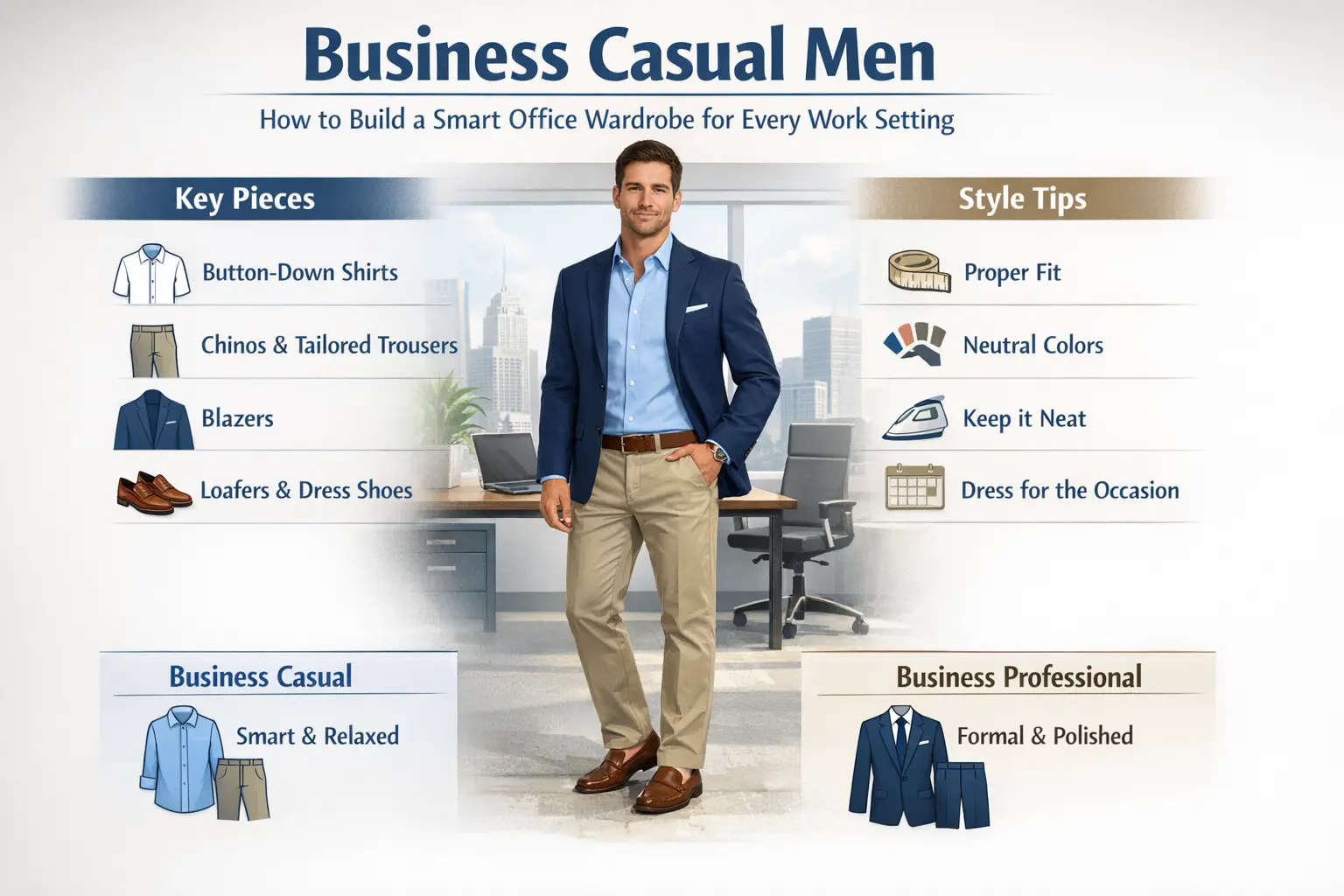
Business casual men is a dress style that sits between formal office wear and relaxed everyday clothing. It usually includes polished but comfortable pieces such as button-down shirts, chinos, tailored trousers, blazers, loafers, and clean shoes. The goal is to look professional without being as strict as a full suit-and-tie outfit.
This dress code matters in modern workplaces because first impressions still count, and the way a man dresses can shape how others view his professionalism, confidence, and attention to detail. In many offices, business casual men styles are now the standard because they balance comfort, flexibility, and a neat appearance. They also help workers adapt to different situations, from daily office tasks to meetings with clients or managers.
It is important to understand the difference between casual, business attire, and business professional attire. Casual clothing is the most relaxed and often includes jeans, sneakers, T-shirts, and informal jackets. Business attire men styles are more formal and usually involve dress shirts, trousers, blazers, and polished shoes. Business professional attire men outfits are the most formal, typically including suits, ties, dress shoes, and a clean, structured appearance. Knowing where each dress code fits helps men choose the right outfit for the right setting.
Table of Contents
ToggleWhat Business Casual Men Should Wear
A strong business casual wardrobe is built around clean, versatile pieces that look sharp without feeling overly formal. The best outfits are simple, well-fitted, and easy to mix and match so you can dress appropriately for different office settings. For business casual men, the goal is to look polished, modern, and comfortable at the same time.
The core pieces usually start with shirts, chinos, tailored trousers, blazers, and clean shoes. Button-down shirts are one of the most reliable choices because they look neat and work well with both trousers and blazers. Solid colors, subtle patterns, and crisp fabrics are ideal because they create a professional appearance without looking stiff.
Chinos are a key part of business casual men styling because they offer a smart balance between relaxed and formal. They are more polished than jeans but less formal than suit pants, which makes them perfect for daily office wear. Neutral colors such as navy, beige, grey, and black are the easiest to style and usually work best in professional environments.
Tailored trousers are another important option when you want a slightly sharper look. They work well for meetings, presentations, or days when you want to appear more refined. If chinos are the flexible everyday choice, tailored trousers are the more elevated option that still fits within the business casual dress code.
A blazer can instantly improve a business casual outfit. It adds structure, sharpness, and professionalism without making the outfit feel too formal. A navy, charcoal, or grey blazer is often the most useful because it can be worn with different shirts and pants throughout the week.
Clean shoes are just as important as the clothing itself. Loafers, derby shoes, oxfords, or minimal leather shoes usually work best because they keep the outfit looking neat and intentional. Even when the rest of the outfit is simple, shoes can make the difference between looking casual and looking office-ready.
.Clothes that are too loose can look sloppy, while clothes that are too tight can look uncomfortable and unprofessional. A good fit should follow the body naturally, with enough room to move but without extra bulk. Well-fitted clothing makes even basic outfits look more expensive and refined.
Fabric also affects the final appearance. Lighter fabrics work well in warmer weather, while thicker or structured fabrics create a sharper silhouette. Wrinkle-resistant and breathable materials are especially useful because they help maintain a clean look throughout the day.
Business Casual Men vs Business Attire Men
Business casual men and business attire men dress codes both aim for a professional look, but they differ in formality, structure, and the situations where each works best. Business casual men outfits focus on comfort and flexibility with pieces like chinos, button-down shirts, loafers, and optional blazers. In contrast, business attire men styles lean toward a more polished appearance, often including dress trousers, collared shirts, sports coats, and dressier shoes.
The main differences show up in the level of formality. Business casual men allows for more relaxed fabrics, colors, and fits, think slim chinos in khaki or navy paired with an Oxford shirt and minimal sneakers in creative offices. Business attire men, however, requires sharper tailoring, neutral tones, and structured pieces such as wool trousers, crisp dress shirts, and leather derbies.
Business attire men is more appropriate in structured environments like corporate meetings, client presentations, industry conferences, or roles in finance, law, or sales. It signals reliability and respect for traditional workplace norms. For example, if your office has a “dress for your day” policy, switch to business attire men when handling important calls or visiting higher-ups.
Business attire men would upgrade that to a long-sleeve button-down, wool slacks, a tie-optional blazer, and oxfords for added refinement. The shift often comes down to fewer patterns, darker colors, and less visible skin, making it ideal when you need to impress without going full suit.
This comparison helps men navigate office expectations smoothly. Understanding both lets you adapt your wardrobe to the day’s demands while staying sharp.
Business Casual Men vs Business Professional Attire Men
Business casual men offers flexibility and comfort for everyday office life, while business professional attire men demands a stricter, more structured approach suited to high-stakes environments. The key difference lies in formality: business casual men prioritizes relaxed yet neat pieces like chinos, button-down shirts, loafers, and optional blazers, allowing for personal style within professional bounds. Business professional attire men, by contrast, follows a conservative blueprint with full suits, ties, and impeccable tailoring to convey authority and seriousness.
In business professional attire men settings, such as law firms, banking, executive meetings, or client-facing roles, the focus shifts to uniformity and polish. This dress code leaves little room for casual elements, requiring coordination across every item to project competence and respect for hierarchy.
Essential items for business professional attire men include suits, dress shirts, ties, and polished shoes. A single-breasted navy or charcoal suit in wool or a wool blend forms the foundation, paired with a crisp white or light blue dress shirt made from cotton for a smooth, matte finish. Ties add formality, opt for silk solids or subtle patterns in conservative colors like burgundy or navy, and must always be knotted properly, such as a Windsor or half-Windsor. Polished shoes, like black or brown cap-toe oxfords, complete the look with a mirror shine, ensuring no scuffs distract from the outfit’s precision.
This distinction helps men elevate their presence strategically. Mastering both ensures you are prepared for any workplace scenario without over- or under-dressing.
Best Clothing Pieces for a Smart Office Wardrobe
Building a business casual men wardrobe starts with versatile, high-quality essentials that work across different days and settings. Focus on timeless pieces that mix well, prioritizing neutral colors, durable fabrics, and clean lines for a consistently polished look.
Shirts
Button-down shirts lead as the most reliable choice for business casual men, offering a crisp collar and versatile fit for pairing with chinos or trousers. Oxford shirts add subtle texture with their basketweave fabric, making them ideal for everyday office wear while maintaining a refined edge. Polo shirts suit more relaxed offices, providing breathability and a sporty touch, stick to fitted styles in solid colors like navy.
Pants
Chinos define business casual men bottoms with their cotton twill construction, available in slim or straight fits for all-day comfort without sagging. Dress trousers elevate the look slightly, using wool blends for a smoother drape and sharper silhouette suitable for meetings. Tailored dark pants, such as slim black or charcoal wool blends, offer the most flexibility, transitioning seamlessly from business casual men daily wear to near-formal occasions.
Outerwear
Blazers anchor business casual men outfits by adding instant structure, navy or grey single-breasted styles in lightweight wool pair with nearly anything for a pulled-together vibe. Sport coats bring patterned texture, like subtle checks, for variety while staying office-appropriate.
Shoes
Loafers provide the easiest slip-on option for business casual men, with leather penny or tassel styles in brown or black offering polish without socks in milder offices. Derbies offer a slightly formal lace-up alternative with open lacing for comfort. Oxfords deliver the sharpest finish, perfect for elevating chinos to business attire men levels. Clean dress sneakers are acceptable in progressive workplaces if they are minimal leather designs in white or neutral tones, no logos or wear.
Selecting these pieces with proper fit ensures your business casual men wardrobe projects confidence and adaptability. Invest in a few quality items over quantity to create endless combinations that suit any office dynamic.
How to Style Business Casual Men Outfits
Styling business casual men outfits means creating combinations that feel effortless yet sharp, using the core wardrobe pieces to adapt to daily needs. The key is thoughtful layering, color coordination, and balance, pairing relaxed bottoms with structured tops keeps business casual men looks professional without stiffness. These outfits work for most offices, allowing men to move confidently from desk work to informal meetings.
Daily Workwear Combinations
For standard office days, start with a white or light blue button-down shirt tucked into slim navy chinos, finished with brown loafers, this classic business casual men setup looks clean and versatile. Add a charcoal blazer for meetings, rolling the sleeves slightly for a modern touch. Another go-to: an Oxford shirt in faint blue paired with tailored grey trousers and derbies, ideal for collaborative environments where business casual men strikes the right professional note.
Warm Weather Examples
In summer, opt for a short-sleeve polo in white or pastel with khaki chinos and minimal leather sneakers, keeping business casual men light and breathable without slipping into weekend casual. A linen-blend button-down over beige tailored pants with loafers works for hotter days, using airy fabrics to maintain polish.
Cold Weather Examples
Layer a crewneck sweater over a collared shirt with wool dress trousers and oxfords for winter business casual men, deep green or navy tones keep it warm yet refined. A sport coat atop a chambray shirt, dark chinos, and derbies handles chillier offices, with a scarf for extra style.
To keep business casual men outfits polished without looking too formal, focus on subtle details: iron shirts for crisp lines, match belts to shoes, and limit patterns to one piece per look. Neutral palettes, navy, grey, earth tones, create cohesion, while slim fits avoid bulk. Accessorize minimally with a leather watch or pocket square, ensuring the overall vibe reads intentional and adaptable, not overdressed.
Common Mistakes to Avoid
Even seasoned professionals can stumble when building business casual men outfits, often by blurring lines between office-appropriate and everyday wear. Avoiding these pitfalls ensures your business casual men style stays sharp, credible, and aligned with workplace expectations. Spotting and fixing them elevates any wardrobe quickly.
Wearing clothes that are too casual is one of the biggest errors in business casual men dressing. Items like graphic tees, ripped jeans, hoodies, or athletic sneakers signal weekend vibes rather than office readiness, undermining professionalism. Instead, swap them for collared shirts, chinos, and loafers to maintain that business casual men balance of ease and polish.
Choosing poor fit or wrinkled fabric kills an otherwise solid business casual men look. Baggy trousers drown the frame, while overly tight shirts highlight discomfort, both distract from your presence. Wrinkled pieces suggest carelessness, so always iron or steam clothing and opt for slim or tailored cuts that skim the body naturally.
Using overly bright colors or loud patterns draws unwanted attention in business casual men settings. Neon shirts, bold stripes, or tropical prints clash with neutral office palettes, making you stand out for the wrong reasons. Stick to muted tones like navy, grey, and earth shades with subtle textures for a refined.
When to Dress More Formally
Knowing when to shift from business casual men to business attire men or business professional attire men ensures you match the occasion’s expectations and project the right level of seriousness. Business casual men works for routine days, but certain situations demand elevated polish to signal respect, competence, and attention to detail. Reading the room, or your calendar, guides the upgrade seamlessly.
Move to business attire men when the day calls for more structure than standard business casual men. This includes internal team meetings where decisions are made, performance reviews, or networking events with colleagues outside your immediate circle. Business attire men adds a blazer, crisp dress shirt, and wool trousers to your chinos-and-button-down base, creating a sharper silhouette without full formality.
Meetings, interviews, presentations, and client-facing roles often require this step up. For job interviews, a business attire men look with a sport coat and tie-optional shirt reassures hiring managers of your readiness. Presentations demand business attire men to hold attention on your message, not your outfit, pair tailored slacks with a blazer for authority. Client interactions, especially first meetings or pitches, benefit from business attire men because it conveys reliability and investment in the relationship.
Opt for business professional attire men as the safer choice in conservative industries or high-stakes scenarios. Boardroom discussions, executive briefings, legal consultations, or finance sector roles favor full suits, ties, and oxfords to align with traditional norms. When in doubt, such as unfamiliar venues or promotions on the line, business professional attire men minimizes risk, ensuring you blend in while standing out positively.
Conclusion
Dressing appropriately remains a powerful tool for success in any workplace, shaping perceptions of competence and respect from the first glance. Mastering business casual men styles ensures you navigate modern offices with confidence, balancing comfort and credibility without overthinking daily choices. It is a skill that pays dividends in networking, promotions, and personal branding.
Business casual men outfits can look both professional and modern by focusing on tailored fits, neutral palettes, and versatile pieces like chinos, button-downs, and loafers. This approach adapts seamlessly from routine tasks to elevated moments, outperforming overly casual or rigid business attire men in flexible environments. Whether upgrading to business professional attire men for key meetings or sticking to core essentials, the right business casual men wardrobe projects polish effortlessly.
.